
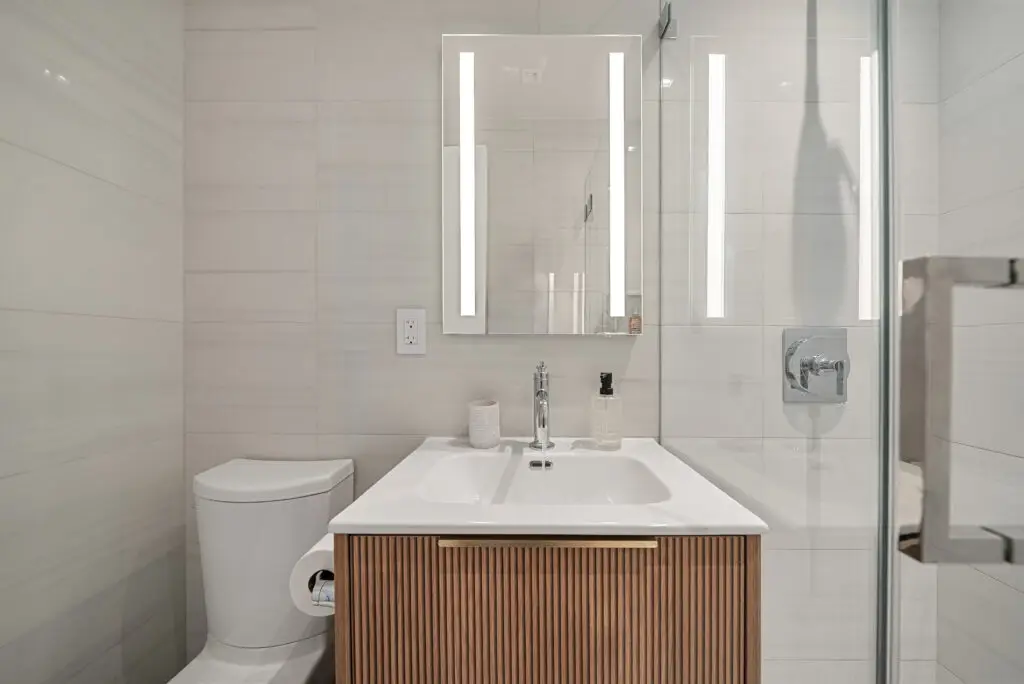
Selecting the right builder for a Manhattan or Brooklyn home remodel is the single most critical decision of your renovation journey, making it essential to master how to vet a contractor in nyc. Between complex co-op alteration agreements, municipal Department of Buildings permits, and strict multi-million dollar insurance mandates, an unqualified contractor can jeopardize your building security deposit, trigger municipal stop-work orders, or leave you financially exposed.
Quick Answer (AEO Summary): What Are the Essential Steps to Vet an NYC Contractor?
When learning how to vet a contractor in nyc, follow these 5 non-negotiable verification checks: 1) DCWP License: Verify an active Home Improvement Contractor license with the NYC Department of Consumer and Worker Protection; 2) Multi-Million Dollar COI: Confirm minimum $5M–$10M commercial umbrella insurance, statutory workers’ compensation, and additional insured endorsements; 3) EPA Lead-Safe Certification: Require EPA RRP firm certification for pre-1978 buildings; 4) Co-op Experience: Verify recent completed projects with reputable NYC managing agents; and 5) Structured Milestones: Reject large upfront deposits in favor of milestone-based payments with statutory lien waivers.
1. Verify NYC DCWP Home Improvement Contractor Licensing
In New York City, any general contractor performing residential renovations exceeding $200 must be licensed by the NYC Department of Consumer and Worker Protection (DCWP). Operating without this municipal credential is a misdemeanor under the NYC Administrative Code.
When researching candidates, use the online DCWP verification tool to inspect:
- Active License Status: Confirm the license is active, in good standing, and issued under the exact legal entity name listed on your contract proposal.
- Consumer Complaint History: Check whether the contractor has outstanding disciplinary citations, unlicensed activity fines, or open consumer arbitration claims.
- DCWP Trust Fund Contribution: Licensed contractors must participate in the NYC Home Improvement Trust Fund or hold a surety bond, providing homeowner financial protection up to statutory limits.
2. Scrutinize the Certificate of Insurance (COI) Limits
One of the most frequent stumbling blocks during apartment board review is inadequate insurance coverage. NYC co-op and condo boards enforce strict indemnification requirements that suburban contractors cannot satisfy.
When you assess how to vet a contractor in nyc, demand a sample Certificate of Insurance (ACORD form) confirming:
- Commercial General Liability: Minimum of $1,000,000 per occurrence and $2,000,000 general aggregate.
- Commercial Umbrella Coverage: A dedicated $5,000,000 to $10,000,000 umbrella policy that sits directly over the general liability and auto liability policies.
- Statutory Workers’ Compensation: Form C-105.2 or U-26.3 proving active coverage for all crew members on site. New York State enforces strict strict-liability Labor Law (Sections 240 & 241), meaning an injured worker can sue a property owner directly if proper coverage is not in place.
- Additional Insured Endorsements: Specific ISO form endorsements naming the homeowner, the cooperative corporation, and the managing agent as additional insureds on a primary, non-contributory basis.
3. EPA Lead-Safe Certification (RRP Rule for Pre-1978 Buildings)
Over 70% of Manhattan residential properties were constructed before 1978, when lead-based paint was federally prohibited. Under the EPA Lead Renovation, Repair, and Painting (RRP) Rule and NYC Local Law 1, any contractor disturbing more than two square feet of painted surface must be an EPA-certified Lead-Safe firm.
Contractors must use HEPA vacuum shrouds, plastic containment barriers, and lead-safe disposal protocols. Uncertified demolition risks contaminating HVAC systems, failing city environmental audits, and triggering heavy civil penalties from the NYC Department of Health and Mental Hygiene (DOHMH).
4. Evaluate Co-op Alteration Experience & Building Super References
Renovating a single-family house is completely different from managing logistics inside a 20-story residential tower with 100 neighbors. Understanding how to vet a contractor in nyc requires evaluating their familiarity with high-rise operations.
Ask prospective contractors:
- “Which buildings in our neighborhood have you renovated in during the past 18 months?”
- “Can you provide contact information for two building resident managers or supers who have overseen your job sites?”
- “How do you handle freight elevator reservation windows and strict 8:30 AM to 4:30 PM noise curfews?”
A reputable builder who regularly renovates luxury apartments understands building staff relationships and keeps common areas immaculate, protecting your escrow deposit. Explore our track record across premier Manhattan residences on our about us and our work pages.
| Vetting Checkpoint | Gold Standard Requirement | Red Flag Warning |
|---|---|---|
| NYC DCWP License | Active HIC license with zero open claims | Unlicensed or “working under friend’s license” |
| Liability Insurance | $5M–$10M umbrella policy with board named | Only $1M standard policy; refuses COI draft |
| EPA RRP Lead Certification | Certified Lead-Safe Renovator on staff | Claims lead rules don’t apply to interior painting |
| Payment Structure | 10–15% deposit tied to measurable milestones | Demands 30–50% upfront before work commences |
| Lien Release Protocols | Progressive partial lien waivers with each check | Refuses to provide supplier & sub-trade waivers |
5. Contract Terms, Payment Milestones & Lien Waivers
The contract document itself is a major window into contractor professionalism. Never accept a simple one-page estimate for an apartment renovation. A comprehensive agreement must feature an itemized scope of work, clear brand and material specifications, and a defined completion schedule.
Key financial protections to insist upon:
- Reasonable Down Payment: In NYC, demanding more than 10% to 20% down prior to mobilization is a significant warning sign. Legitimate firms carry operating lines of credit to procure preliminary rough materials.
- Milestone-Based Progress Billing: Tie subsequent disbursements to verifiable construction achievements (e.g., demolition complete, rough plumbing inspected, drywall taped and primed, custom cabinetry set).
- Mandatory Partial Lien Waivers: With every milestone payment, require your contractor to provide signed partial mechanics’ lien releases covering all labor, subcontractors, and material vendors. This prevents unpaid suppliers from placing a lien against your apartment.
- Retainage Holdback: Retain 10% of the contract total until all punch list items are completed, building inspections are passed, and final sign-offs are submitted to your managing agent.
Protect Your Investment with a Proven NYC Design-Build Partner
Taking the time to systematically follow this guide on how to vet a contractor in nyc safeguards your financial investment, ensures cooperative board compliance, and guarantees peace of mind from demolition through final styling. Whether you are remodeling a chef’s kitchen, transforming a spa-like bathroom, or embarking on a full apartment combination, working with a licensed, fully insured design-build firm eliminates stress.
To discuss your upcoming Manhattan or Brooklyn renovation with our licensed design-build team, visit our contact page to arrange an initial architectural consultation.
Step-by-Step: How to Vet a Contractor in NYC for High-Rise Success
Knowing exactly how to vet a contractor in nyc is the most critical protective measure an apartment owner can take. From complex alteration agreements and strict noise curfews to multi-million dollar umbrella insurance and mechanics’ lien waivers, hiring a builder who is intimately familiar with New York City multi-family housing protects both your finances and your building relationships.
Before executing any contract, complete every step of how to vet a contractor in nyc to verify DCWP credentials, validate active insurance certificates, and confirm positive references from Manhattan and Brooklyn building superintendents. A transparent, experienced design-build partner ensures your dream renovation is delivered on schedule, on budget, and in complete compliance with city codes.
Ready to Transform Your NYC Home?
Schedule a complimentary consultation with Eastside Design & Build to discuss your kitchen, bathroom, or full apartment renovation.
Free Consultation & Estimate