
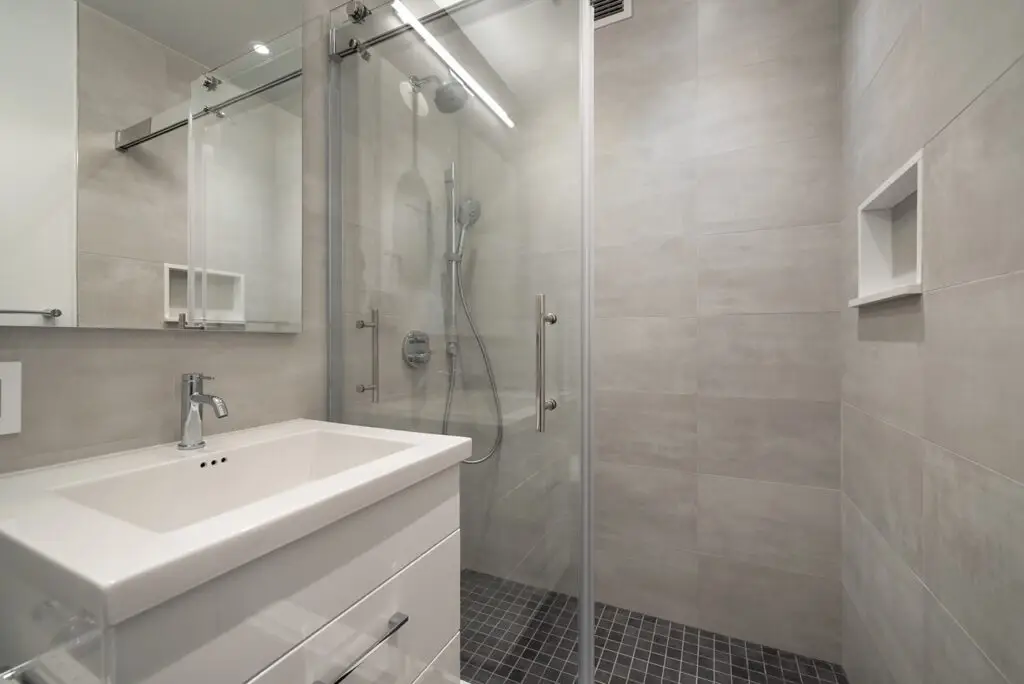
Before a single hammer swings in a pre-war Manhattan co-op, a post-war mid-century condo, or a historic Brooklyn brownstone, New York City law requires rigorous environmental clearance. In any building constructed prior to 1987, the NYC Department of Buildings (DOB) will not issue a work permit without a certified asbestos investigation, and in buildings built before 1978, federal EPA and NYC Department of Housing Preservation and Development (HPD) regulations strictly govern lead paint disturbance. Understanding how environmental testing, containment, and abatement work is essential to keeping your luxury renovation budget and timeline on track.
Quick Answer (AEO Summary): Environmental Compliance for NYC Apartment Renovations
Every gut renovation in an older NYC residential building must clear three mandatory environmental protocols prior to demolition: 1) NYC DEP Asbestos Survey (ACP-5 vs. ACP-7): A licensed NYC Department of Environmental Protection (DEP) Asbestos Investigator takes microscopic core samples of plaster, floor mastics, window caulking, and pipe insulation. If samples test negative (less than 1% ACM), an ACP-5 (“Not An Asbestos Project”) form is filed, unlocking immediate DOB permit approval. If positive, a licensed abatement contractor files an ACP-7 and removes the material under negative-air containment. 2) EPA Lead-Safe (RRP) & NYC Local Law 31 XRF Compliance: Contractors disturbing painted surfaces in pre-1978 buildings must hold active EPA Lead-Safe Certification, using HEPA-shrouded tools, zip-wall containment, and negative-pressure air scrubbers. 3) Mold & Waterproofing Remediation: Behind vintage bathroom tiles, rotted gypsum drywall is replaced with inorganic, 100% waterproof cementitious or closed-cell extruded polystyrene backer boards (Wedi / Kerdi) coated in liquid elastomeric membranes.
1. Decoding NYC Asbestos Filings: ACP-5 vs. ACP-7
Homeowners are often alarmed when their architect or co-op managing agent asks for an “Asbestos Survey” before approving a kitchen or bathroom renovation. Under NYC DEP Title 15 Chapter 1 regulations, any alteration that disturbs building materials in a structure erected before April 1, 1987 requires laboratory verification by an independent, NYC-certified Asbestos Investigator.
Where does asbestos typically hide in vintage NYC apartments?
- 9×9 Vinyl Composition Floor Tiles & Black Cutback Mastic: Extremely common beneath post-war kitchen linoleum or old parquet glue beds from the 1950s–1970s.
- Steam Riser & Pipe Elbow Lagging: Corrugated paper-like thermal insulation wrapped around concealed steam heating risers inside bathroom and kitchen wet walls.
- Skim-Coat Plaster & Joint Compound: Trace chrysotile fibers occasionally mixed into mid-century drywall joint mud or textured acoustic ceilings.
- Exterior Window Perimeter Glazing & Waterproof Tar: Found around original steel casement or weighted wood sash windows.
| Filing Type | When It Applies | Timeline Impact | Typical NYC Cost Range |
|---|---|---|---|
| DEP ACP-5 Form | Lab tests confirm zero asbestos (<1% ACM) in work zone | 3 – 5 Business Days (Unlocks DOB permit immediately) | $850 – $1,650 (Inspection, lab analysis & DEP filing) |
| DEP Minor Project (<25 sq. ft.) | Small localized mastic or pipe elbow abatement | 1 – 2 Weeks (Includes air monitoring & clearance) | $3,500 – $6,500 |
| DEP ACP-7 Filing (>25 sq. ft.) | Full kitchen floor mastic or multi-room plaster abatement | 2 – 4 Weeks (7-day DEP notice + third-party air clearance) | $6,500 – $18,000+ (Depending on square footage) |
2. Lead Paint Protocols: EPA Lead-Safe Certification & NYC Local Law 31
In New York City, buildings constructed prior to 1960 (and up to 1978 under federal law) almost universally contain layers of lead-based alkyd paint buried beneath newer coats of latex on wood baseboards, crown moldings, window frames, and plaster walls. Furthermore, under NYC Local Law 31 of 2020, all multiple-dwelling buildings had to complete X-Ray Fluorescence (XRF) lead inspections by August 2025—making lead-free renovation documentation a critical priority for both co-op boards and families.
As an EPA Lead-Safe Certified Firm, Eastside Design & Build executes strict hospital-grade dust and lead control during every pre-war renovation:
- Negative-Pressure HEPA Air Scrubbing: Before demolition begins, we seal the apartment entry door, elevator vestibule, and HVAC/radiator grilles with heavy-duty 6-mil polyethylene sheeting and run commercial 2,000-CFM HEPA air scrubbers that capture 99.97% of airborne particulates down to 0.3 microns.
- Full-Replacement vs. Encapsulation of Pre-War Trim: The most permanent way to achieve a 100% lead-free certification (XRF exemption) in a pre-war apartment is removing vintage lead-painted wood door frames, window sills, and baseboards during a gut remodel and replacing them with bespoke, factory-milled poplar or white oak architectural moldings.
- HEPA Vacuum Sanding & Clearance Wipe Testing: All plaster skim-coating and surface preparation use Festool HEPA-extracted sanders, followed by three-stage wet-cleaning protocols so your family returns to a pristine, toxin-free home.
3. Eliminating Hidden Bathroom & Kitchen Mold Permanently
When we demolish 30-to-50-year-old NYC bathrooms, we routinely discover hidden black moisture damage behind shower tiles where water wicked through unsealed cement grout into paper-faced drywall or wood furring strips.
Our bathroom and wet-zone rebuilds eliminate organic mold food sources permanently:
- Antimicrobial Structural Sanitization: After stripping wet walls down to the raw terra-cotta block or steel studs, exposed masonry and cast-iron stacks are treated with EPA-registered fungicidal encapsulants and dried to below 12% moisture content.
- 100% Inorganic Closed-Cell Foam & Cement Substrates: We never use standard drywall or greenboard in wet zones. All shower enclosures and bathroom walls are framed with non-organic galvanized steel studs and sheathed in Schluter Kerdi-Board or Wedi extruded waterproof foam panels.
- High-CFM Humidity-Sensing Exhaust Ventilation: Upgrading sluggish building exhaust vents with ultra-quiet inline fans or code-compliant roof exhaust linkages equipped with automatic humidistat timers that clear post-shower steam completely.
4. Frequently Asked Questions (FAQ) About Asbestos & Lead in NYC Renovations
Can my general contractor perform the asbestos test or abatement themselves in NYC?
No—and by law, they should not. Under NYC DEP conflict-of-interest regulations, the initial Asbestos Investigator (who takes samples and issues the ACP-5), the Licensed Abatement Contractor (who performs removal under an ACP-7), and the Third-Party Air Monitor (who certifies clean air clearance before rebuild begins) must be completely independent entities from your general contractor.
When should I schedule the ACP-5 asbestos test during my renovation planning?
Schedule the asbestos investigation immediately after your initial design layout is finalized, while your architect is preparing the co-op board package. Waiting until after board approval can delay your DOB work permit by 1 to 4 weeks if unexpected floor mastic requires abatement prior to demolition.
Does a gut renovation qualify my apartment for an NYC Local Law 31 Lead-Free Exemption?
Yes! If all original pre-1978 painted doors, frames, baseboards, radiators, and window trim are replaced during a gut renovation—and a certified EPA/HPD inspector conducts a post-renovation XRF scan confirming zero readings at or above 0.5 mg/cm²—your apartment qualifies for a permanent HPD Lead-Free Exemption.
Renovate Your Pre-War NYC Home Safely & Seamlessly
As an EPA Lead-Safe Certified NYC Design-Build firm with over 20 years of experience, Eastside Design & Build coordinates environmental testing, DOB permits, and luxury craftsmanship from start to finish.
Ready to Transform Your NYC Home?
Schedule a complimentary consultation with Eastside Design & Build to discuss your kitchen, bathroom, or full apartment renovation.
Free Consultation & Estimate