
A tub to shower conversion NYC homeowners complete in a co-op or condo typically costs between $18,000 and $38,000 when done as a standalone wet-area upgrade, or $40,000 to $75,000 when paired with a full bathroom gut renovation. Replacing an unused alcove cast-iron tub with a walk-in glass shower is one of the fastest ways to make a compact 5-by-8 Manhattan or Brooklyn bathroom feel brighter, safer, and far easier to use every morning.
Unlike suburban drop-in acrylic liners, converting a bathtub inside a New York City apartment involves building alteration agreements, strict waterproofing inspections, and a critical plumbing detail hidden beneath your bathroom floor: drain pipe sizing. Here is what actually goes into doing the job properly in 2026.
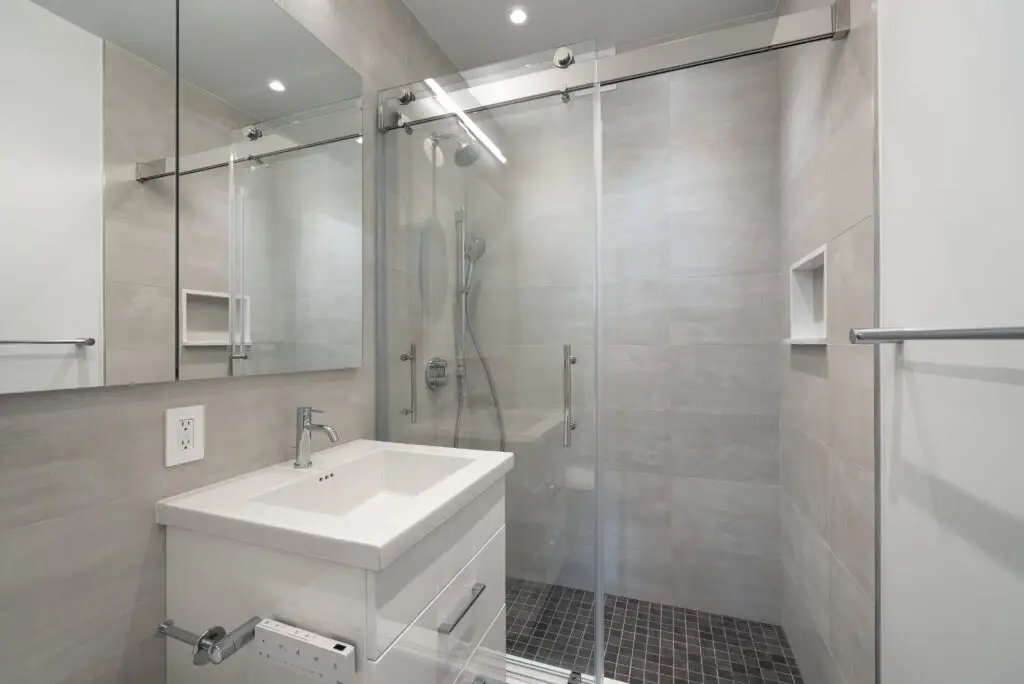
Tub to Shower Conversion NYC Cost Breakdown (2026)
Pricing depends on whether you renovate only the wet alcove or rebuild the entire bathroom at the same time. Because co-op protection, debris hauling, insurance certificates, and licensed plumbing mobilization have fixed base costs in New York City, many owners choose to update the floor tile and vanity while the room is already open.
| Project Scope | Typical 2026 NYC Range | What Is Included |
|---|---|---|
| Wet-Area Tub-to-Shower Only | $18,000 – $32,000 | Cast-iron tub removal, 2-inch drain trap upgrade, new pressure-balanced or thermostatic valve, sheet/liquid waterproofing, custom tile surround, low-threshold curb, frameless glass door |
| Standard Full Bath + Walk-In Shower | $40,000 – $68,000 | Full gut to studs, new floor and wall tile throughout, recessed shower niche, built-in bench, new vanity, toilet, lighting, and DOB plumbing sign-off where required |
| Luxury Primary Walk-In or Curbless Suite | $75,000 – $125,000+ | Large-format porcelain or natural marble slabs, linear drain, handheld + rain head + body sprays, radiant heated floor, custom millwork vanity |
For broader room-wide numbers beyond the shower enclosure, compare our full NYC bathroom renovation cost guide.
The #1 Code Issue: 1.5-Inch Tub Drains vs. 2-Inch Shower Drains
In most pre-war and mid-century New York apartments, existing bathtubs drain through a 1.5-inch branch pipe. Under the NYC Plumbing Code, a standalone walk-in shower requires a minimum 2-inch drain and P-trap because a shower lacks the high sidewalls of a tub to hold standing water if drainage slows down.
During a tub to shower conversion NYC licensed master plumbers inspect how the waste line connects to the vertical cast-iron stack:
- Pre-war cinder-fill floors: There is usually 4 to 6 inches of cinder concrete above the structural slab, giving a licensed plumber enough depth to replace the old 1.5-inch lead bend or galvanized pipe with a code-compliant 2-inch cast-iron or copper trap without disturbing the neighbor’s ceiling below.
- Post-war poured concrete slabs: High-rise slabs are thinner and cannot be trenched or chipped without structural engineering sign-off. In these buildings, your contractor coordinates closely with the building engineer on approved trap adapters, flow-rate restrictions on showerheads, or raised shower curbs that provide proper pitch to the riser.
Can You Do a Curbless Shower When Removing a Tub?
Homeowners love the clean look of a zero-threshold floor, and it is an ideal aging-in-place upgrade. Whether you can go completely curbless depends on your floor assembly:
- Wood-joist brownstones and townhouses: Subfloors can often be recessed between joists so the shower pan sits flush with the main bathroom tile.
- Pre-war co-ops with cinder fill: Removing old mud beds frequently provides the 2 to 3 inches needed for a sloped mortar bed and linear drain—which we detail in our curbless spa bathroom guide.
- Post-war concrete condos: Raising the dry bathroom floor slightly or installing a sleek 2.5-inch low-profile marble curb is usually the most practical solution.
Co-op Board Rules, Flood Testing and DOB Permits
Even if the toilet and sink stay in exact position, virtually every Manhattan and Brooklyn co-op or condo classifies a tub removal as a major wet-work alteration rather than a cosmetic refresh.
24-Hour Shower Pan Flood Testing
Most managing agents require the resident superintendent or building engineer to witness a 24-hour flood test before a single piece of tile is set. The drain is plugged, the waterproofed shower pan is filled with several inches of water, and the water level is marked and checked the next day to guarantee zero leaks above downstairs neighbors.
When Is a DOB Plumbing Permit Needed?
Replacing a tub with a shower frequently requires a Limited Alteration Application (LAA) or Alt-2 plumbing filing by a Licensed Master Plumber because the fixture type, trap size, and shower mixing valve are changing. You can review exact city thresholds in our breakdown of DOB permits for NYC kitchen and bathroom renovations.
Will Removing Your Only Bathtub Hurt Apartment Resale Value?
Real estate brokers across New York follow a reliable rule of thumb:
- Studios and one-bedroom apartments: Buyers overwhelmingly prefer a spacious, well-lit walk-in glass shower over a cramped 60-inch tub with a shower curtain. Converting the tub almost always improves buyer appeal.
- Two-bedroom and larger family apartments: Families with young children strongly prefer having at least one bathtub in the home. Converting the primary en-suite tub into a walk-in shower while keeping a soaking tub in the hallway second bath gives you the best of both worlds.
Smart Design Features That Make a 60-Inch Shower Feel Huge
A standard NYC alcove tub leaves a 60-inch wide by 30-to-32-inch deep footprint once removed. Thoughtful detailing turns that exact rectangle into a generous daily retreat:
- Frameless low-iron glass panels: Clear Starphire glass eliminates the green tint of standard tempered glass and lets sightlines travel wall-to-wall across the room.
- Fixed panel plus hinged door (or barn-style bypass): Check toilet clearance before ordering glass so the door swings cleanly without hitting the vanity or commode.
- Thermostatic valve placement: Mount the control valve on the wall opposite the showerhead—or near the entry—so you can turn the water on without getting sprayed by cold water.
- Recessed niches and corner footrests: Frame a 14-by-24-inch niche into a non-plumbing partition wall rather than hanging metal caddies from the showerhead.
- Slip-resistant floor tile: Choose mosaic marble, honed stone, or porcelain rated with a wet DCOF of 0.42 or higher as recommended by the Tile Council of North America.
Plan Your NYC Bathroom Upgrade
Explore completed Manhattan and Brooklyn walk-in showers on our bathroom renovation portfolio and see real apartment transformations in our before-and-after gallery. Ready to find out whether your floor slab and plumbing risers support a curbless or low-curb walk-in shower? Request a complimentary consultation and estimate with Eastside Design & Build.
Frequently Asked Questions
How much does a tub to shower conversion cost in NYC?
A standalone tub-to-shower conversion in an NYC apartment generally costs $18,000 to $32,000 in 2026, including licensed plumbing, waterproofing, custom tile, and frameless glass. Doing it as part of a full bathroom gut renovation typically ranges from $40,000 to $75,000.
Does converting a tub to a shower require a DOB permit in NYC?
In many buildings, yes. Changing a 1.5-inch tub waste line to a code-required 2-inch shower drain and installing a new concealed shower body typically requires a Licensed Master Plumber filing and co-op or condo alteration approval.
How long does an apartment tub to shower conversion take?
Active construction inside the apartment usually takes 3 to 5 weeks for a shower-only conversion—accounting for demolition, plumbing rough-in, a 24-hour flood test, tile setting, and custom glass fabrication (which is templated after tile is finished and takes 7 to 10 business days).
Should I keep at least one bathtub in my NYC apartment?
In a studio or one-bedroom apartment, replacing the only tub with a walk-in shower is widely favored by NYC buyers. In two-bedroom or larger apartments, keeping a tub in the secondary bathroom while converting the primary bath to a walk-in shower protects resale appeal for families.
Ready to Transform Your NYC Home?
Schedule a complimentary consultation with Eastside Design & Build to discuss your kitchen, bathroom, or full apartment renovation.
Free Consultation & Estimate